 |
| PVFDNY YouTube |
 |
| Pleasant Valley Fire District |
|
| Pleasant Valley Fire Company #1 |
|
| Salt Point Fire Company |
| Upcoming Public Events |
| 2026 Incidents | |
| Jan | 127 |
| Feb | 108 |
| Mar | 120 |
| Apr | 115 |
| May | |
| June | |
| July | |
| Aug | |
| Sept | |
| Oct | |
| Nov | |
| Dec | |
| Total | |
| Total | 470 |
| 2025 Incidents | |
| Jan | 130 |
| Feb | 120 |
| Mar | 98 |
| Apr | 110 |
| May | 125 |
| June | 138 |
| July | 144 |
| Aug | 129 |
| Sept | 120 |
| Oct | 114 |
| Nov | 107 |
| Dec | 150 |
| Total | 1485 |
| 2024 Incidents | |
| Jan | 110 |
| Feb | 102 |
| Mar | 117 |
| Apr | 104 |
| May | 104 |
| June | 120 |
| July | 107 |
| Aug | 116 |
| Sept | 106 |
| Oct | 131 |
| Nov | 125 |
| Dec | 119 |
| Total | 1361 |
| 2023 Incidents | |
| Jan | 132 |
| Feb | 124 |
| Mar | 120 |
| Apr | 120 |
| May | 132 |
| June | 122 |
| July | 136 |
| Aug | 144 |
| Sept | 139 |
| Oct | 124 |
| Nov | 126 |
| Dec | 126 |
| Total | 1545 |
| 2022 Incidents | |
| Jan | 140 |
| Feb | 110 |
| Mar | 130 |
| Apr | 118 |
| May | 123 |
| June | 134 |
| July | 133 |
| Aug | 134 |
| Sept | 116 |
| Oct | 120 |
| Nov | 119 |
| Dec | 135 |
| Total | 1512 |
| 2021 Incidents | |
| Jan | 145 |
| Feb | 124 |
| Mar | 94 |
| Apr | 125 |
| May | 130 |
| June | 141 |
| July | 145 |
| Aug | 135 |
| Sept | 126 |
| Oct | 124 |
| Nov | 130 |
| Dec | 139 |
| Total | 1558 |
| 2020 Incidents | |
| Jan | 110 |
| Feb | 101 |
| Mar | 101 |
| Apr | 83 |
| May | 97 |
| Jun | 102 |
| Jul | 108 |
| Aug | 122 |
| Sep | 94 |
| Oct | 109 |
| Nov | 114 |
| Dec | 120 |
| Total | 1261 |
| 2019 Incidents | |
| Jan | 104 |
| Feb | 98 |
| Mar | 113 |
| Apr | 98 |
| May | 99 |
| Jun | 117 |
| Jul | 94 |
| Aug | 95 |
| Sep | 94 |
| Oct | 126 |
| Nov | 100 |
| Dec | 124 |
| Total | 1262 |
| Web Counters | ||||||
|
|
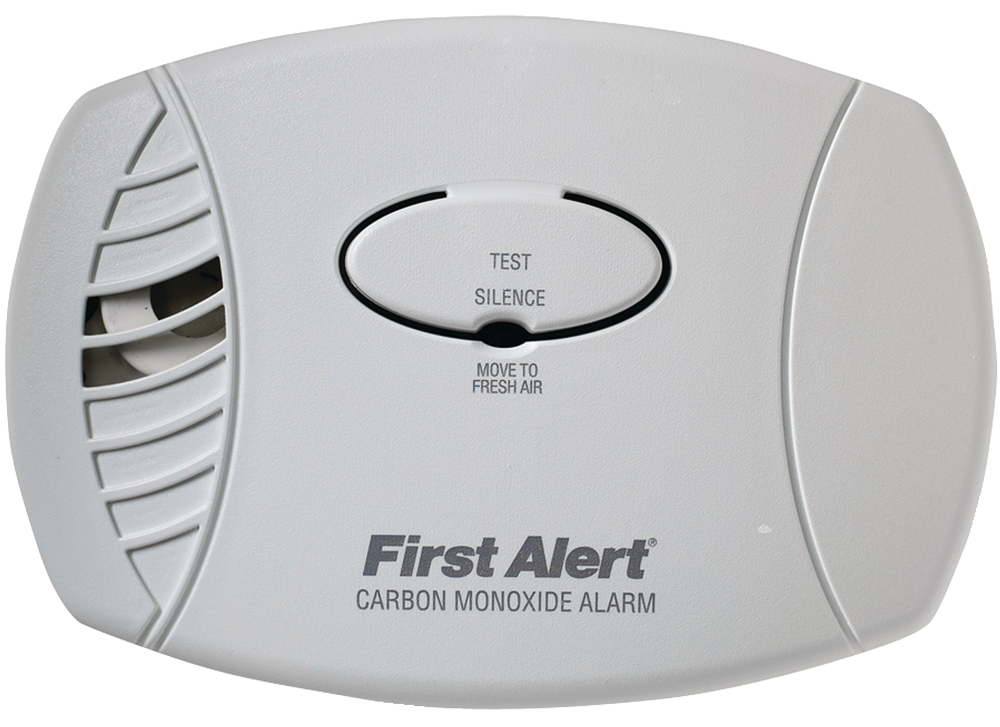
Carbon Monoxide Alarm
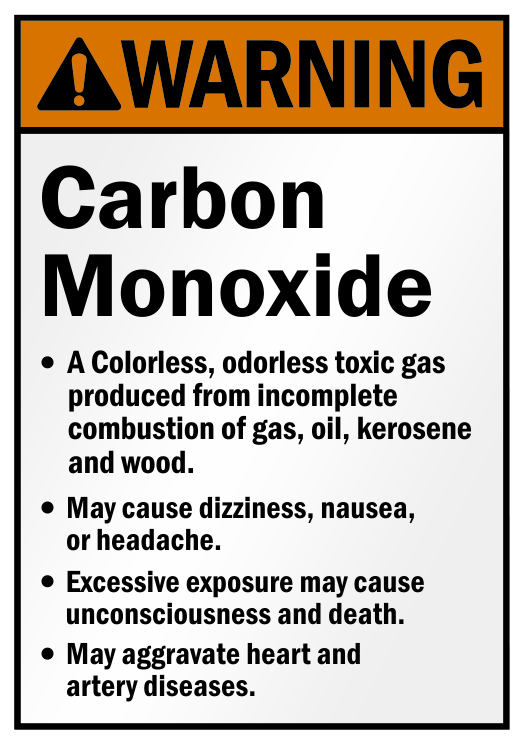
What Is Carbon Monoxide? Carbon monoxide (CO) is a colorless, odorless gas that interferes with the delivery of oxygen in the blood to the rest of the body. It is produced by the incomplete combustion of burning fuels. What Are the Major Sources of CO?  Carbon monoxide is produced as a result of incomplete burning of carbon-containing fuels including wood, coal, charcoal, fuel oil and natural gas. It can be emitted by combustion sources such as kerosene and gas space heaters that are unvented, fireplaces, woodstoves, furnaces, gas stoves, and water heaters, automobile exhaust from attached garages, and tobacco smoke. Problems can arise as a result of improper installation, maintenance, or inadequate ventilation. What Are the Health Effects? Carbon monoxide interferes with the distribution of oxygen in the blood to the rest of the body. Depending on the amount inhaled, this gas can impede coordination, worsen cardiovascular conditions, and produce fatigue, headache, weakness, confusion, disorientation, nausea, and dizziness. Very high levels can cause death. The symptoms are sometimes confused with the flu or food poisoning. Fetuses, infants, elderly, and people with heart and respiratory illnesses are particularly at high risk for the adverse health effects of carbon monoxide. An estimated 300 people die each year as a result of carbon monoxide poisoning and thousands of others end up in hospital emergency rooms. Safety Tips:
* Install CO alarms (listed by an independent testing laboratory) inside your home to provide early warning of accumulating CO. * CO alarms should be installed in a central location outside each separate sleeping area. * Test CO alarms at least once a month, and replace CO alarms according to the manufacturer's instructions. * If you need to warm a vehicle, remove it from the garage immediately after starting it. Do not run a vehicle, generator, or other fueled engine or motor indoors, even if garage doors are open. Make sure the exhaust pipe of a running vehicle is not covered with snow. During and after a snow storm, make sure vents for the dryer, furnace, stove, and fireplace are clear of snow build-up. * Have fuel-burning household heating equipment (fireplaces, furnaces, water heaters, wood and coal stoves, space or portable heaters) and chimneys inspected by a professional every year before cold weather sets in. When using a fireplace, open the flue for adequate ventilation. * Open a window slightly whenever using a kerosene or gas heater. (Kerosene heaters are illegal in many states. Always check with local authorities before buying or using one.) Only refuel outside, after the device has cooled. Never use your oven to heat your home. * Only use barbecue grills which can produce CO outside. Never use them in the home or inside the garage. * When purchasing new heating and cooking equipment, select products tested and labeled by an independent testing laboratory. * When purchasing an existing home, have a qualified technician evaluate the integrity of the heating and cooking systems, as well as the sealed spaces between the garage and house. * When camping, remember to use battery-powered heaters and flashlights in tents trailers, and motor homes. * CO alarms are not substitutes for smoke alarms. Smoke alarms should be installed on every level of the home and in or outside all sleeping areas. * Know the difference between the sound of the smoke alarms and the sound of the CO alarms. If your CO alarm sounds If it is a battery-powered detector and you get an intermittent alarm, replace the battery. If the alarm continues after replacing the battery - Call 911 If it is a steady alarm or you are unable to determine what type of alarm is ringing, evacuate the home or business immediately. Never disconnect the alarm to silence it, Do not waste time to open doors and windows to let fresh air in. Once you and your family are safe and out of danger dial 911 to report the CO alarm activation. Do not re-enter until the fire department says it is ok. They will have special meters that will be able to detect if you have carbon monoxide gas in your home or business. If you think you have Carbon Monoxide Poisoning? Don't ignore symptoms, especially if more than one person is feeling them. If you think you are suffering from carbon monoxide (CO) poisoning, leave the building get fresh air immediately. Call 911 to report the emergency and be sure to tell the 911 operator that you suspect CO poisoning. If you do not have a working smoke/CO alarm for your residence due to financial reasons, call the firehouse at (845) 635-9350 x114 or email Firefighter/MTO Tom Murphy at murphy303@pvfdny.org.
 |